
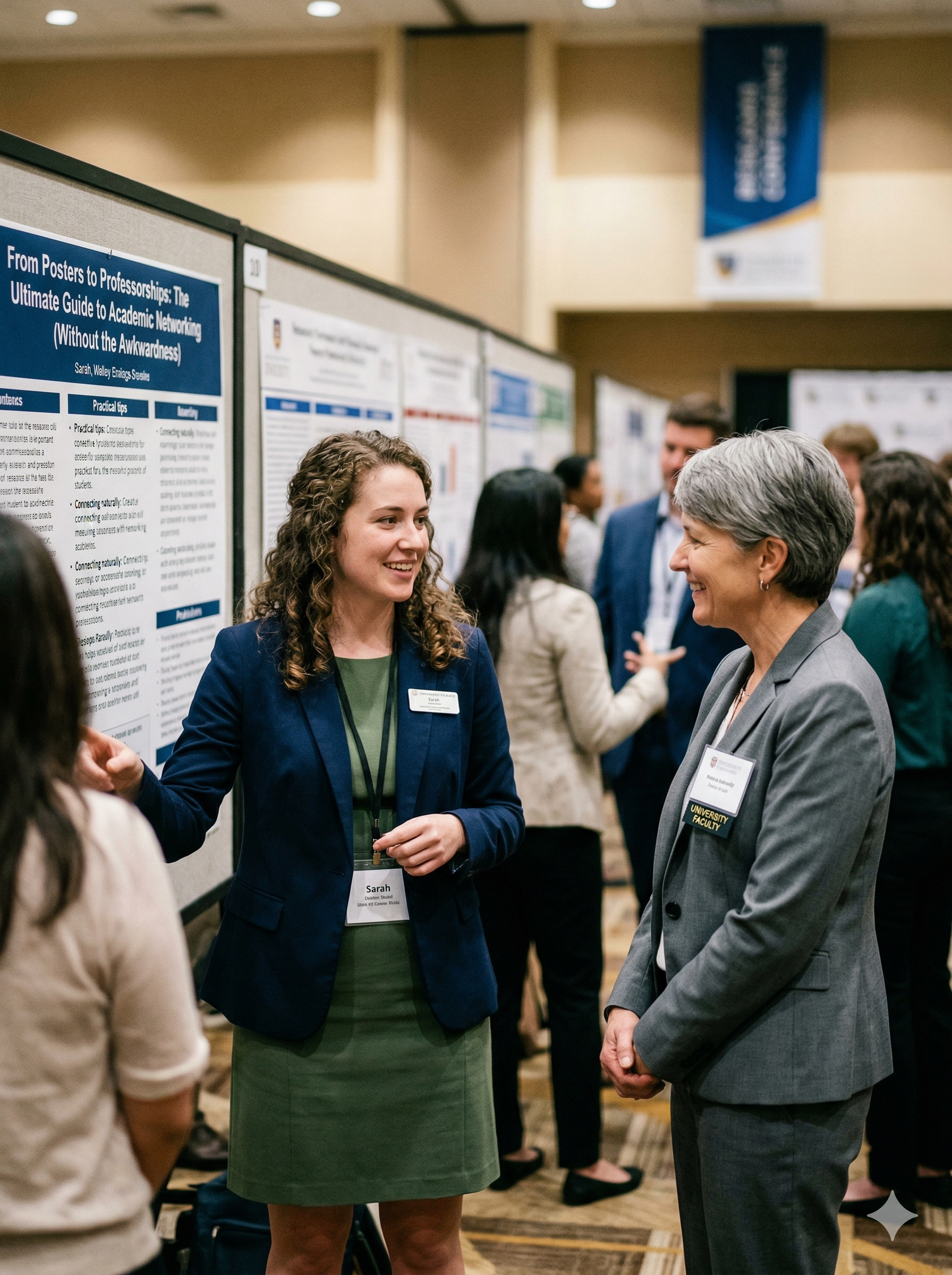

Let’s be honest: the academic job market can sometimes feel like a highly intellectual hunger games. You’ve survived the thesis defense, you’ve published until you nearly perished, and now you’re staring down the barrel of endless search committee reviews. But here is the secret that no one explicitly tells you in grad school: your CV gets you in the pile, but your network pulls your application to the top. Networking doesn’t have to mean awkwardly hovering around a cheese platter while trying to impress a tenured professor with big words. It’s simply about finding your people, sharing your research passions, and keeping your ear to the ground for upcoming faculty or postdoc openings. So, grab your favorite caffeinated beverage, and let’s talk about where you need to be mingling this year to land that dream role.
First up are the big leagues: your discipline’s major annual conferences. Whether you’re presenting at the massive Gordon Research Conferences in the sciences or the MLA in the humanities, these events are absolute goldmines for job seekers. However, the real networking magic doesn’t happen during the Q&A of a 9:00 AM symposium; it happens in the hallways and coffee shops. Instead of hiding in your hotel room between sessions to tweak your slides, make a game plan to invite a junior faculty member or a principal investigator whose lab you admire for a quick 15-minute coffee chat. Remember, everyone at these events is a huge nerd for their specific subject, so asking them about their latest paper is the ultimate, fail-proof icebreaker!
Now, let’s talk about networking on a postdoc budget, because dropping thousands of dollars on cross-country flights and registration fees isn’t always feasible. Fortunately, the virtual era has blessed us with a wealth of free networking events. Organizations like the National Postdoctoral Association (NPA) regularly host free virtual town halls, career panels, and networking mixers specifically designed for early-career researchers. Similarly, keeping an eye on academic career hubs like jobs.ac.uk will often lead you to free webinars and online job fairs. These virtual spaces are fantastic because the playing field is leveled—you can introduce yourself in the chat and connect with speakers afterward without the sweaty palms of a face-to-face elevator pitch.
Speaking of the internet, don’t underestimate the power of treating social media like a 24/7, free academic mixer. If you aren’t active in these digital spaces, you are missing out on hidden job postings and organic, low-stakes connections. Platforms like ResearchGate act as a dedicated hub for scholars to collaborate and share pre-prints, making it easy to casually chat with authors in your exact niche. Meanwhile, platforms like X and LinkedIn are constantly buzzing with hashtags like #AcademicChatter and #PhDChat. Engaging thoughtfully with a senior faculty member’s post about their recent publication is the modern equivalent of exchanging business cards, and it costs absolutely nothing.
At the end of the day, networking is just making academic friends who might eventually become your colleagues. Whether you are shaking hands at a global summit or sending a friendly direct message after a virtual panel, the key is to be genuine, curious, and consistent. And please, don’t forget the most crucial step: the follow-up! Send that quick email thanking them for their time, attach the paper you discussed, and keep the door open. The academic world is surprisingly small, and the connection you make at a free webinar today could very well be the search committee chair for your dream job tomorrow. Now go out there and show them how brilliant you are!